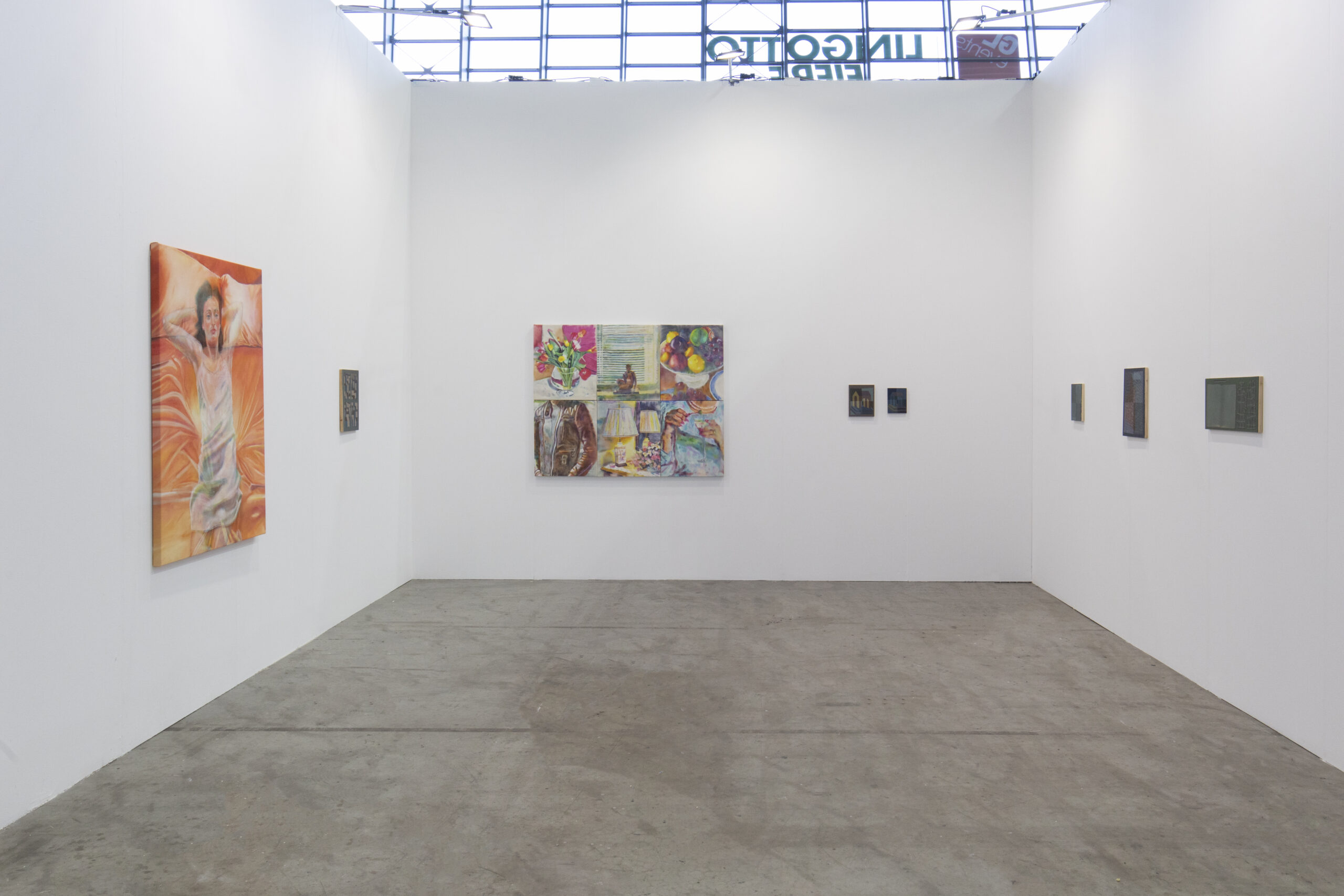
Artissima Turin 2026
30 October - 1 November
Soup is delighted to return to Turin for Artissima 2026, with a duo presentation of new paintings by Holly Keogh and Nina Silverberg.
Keogh (b.1991, North Carolina) is an American painter living and working in London. Her paintings explore how glamour can be used as a power structure to shape, commodify and contain femininity; how the increasingly blurred boundaries between public and private leads to a conflation of personal and collective memory; how the maintenance of a perpetual online presence inflates and obscures anxieties or vulnerabilities; and how the need to desire and be desired ultimately overpowers all of the above. Incorporating imagery from family photographs, art historical or pop-cultural allegories and her own lived experience, Keogh’s staged compositions both materially and conceptually engage with the distinctions between permanence and ephemerality – as realistic renderings in a saturated palette hold space for final, fleeting, figurative depictions added using a precarious, relief-based printing process. Employing a monotype printing process developed over the past several years, Keogh paints onto sheets of upholstery foam, their spongy surface absorbing the liquid acrylic pigment before being pressed onto the canvas composition, transferring image to ghostly imprint.
Silverberg (b. 1994, Rome) is an Italian painter living and working in London. Her paintings are marked by their quiet energy, muted palette and often small scale. Characterised by both a solitary stillness and an implied intimacy, she examines ideas of isolation, sickness and the relationship between interior and exterior worlds. The artist’s subjects include timeless signifiers of human care and comfort, with sick beds serving as analogous self-portraits; silhouetted structures acting as architectural archetypes of the Mediterranean home; gloves personifying a fashion-forward approach to protection or precaution; and, most recently, books embodying an escape to that inviting inner realm. At once melancholic and reassuring, they suggest an inherent frailty and offer empowerment as coping mechanisms against our contemporary condition. Her practice a process of self-referential self-discovery, motifs from previous paintings and bodies of work begin to adorn the pages of her open books. As surrogates of the subconscious, these painted journals become containers for not only the artist’s current concentrations but also a contemplation of previous artistic intentions and future proposals.